Operational Velocity: How Mid-Market Firms Are Driving Digital Workflows in the Field and on the Floor

Three mid-market businesses across home improvement, marine IoT, and medical software show how purpose-built digital workflows eliminate the gap between where work happens and where data lives.

Author: One Team US Editorial Team
July 8, 2026
8 min read
Field salesperson using a custom digital workflow app during an in-home consultation, One Team US

Operational velocity starts where work happens

Mid-market firms that scale without adding headcount close the gap between where work happens and where data lives, in the field, on the floor, at the dock, and in the exam room.

Businesses that move fastest in 2026 are not the ones that adopted the most software or AI integrations, they are the ones that eliminated the distance between where work happens and where data lives. It doesn't matter where this work happens. It can be in the field, the shop floor, the dock, the exam room; anywhere someone is doing a vital task that needs access to data or other systems of record. Traditionally, these include spreadsheets, CRM/ERPs, databases, and other reporting tools, but where information usually gets entered after the tasks are completed.

You might recognize some of these critical workflows, where the modern data stack, and increasingly AI might make a difference in your business:

  • A sales rep creates a quote during the visit and it syncs immediately, instead of writing notes and building the quote later.
  • Sensors report manufacturing conditions continuously, instead of someone doing manual checks and logging them after the fact.
  • A clinician has all needed references/tools in one app, instead of switching between devices and systems.

In short: the speed needed today comes from real-time, in-workflow data capture and access. No handoffs, re-entry, or delays.

For most mid-market businesses, that distance still exists. A field representative finishes a customer appointment and drives back to the office to write up a quote. A marina operator walks the dock each morning to check on vessels that a sensor could have been watching all night. A medical professional puts down a device that doesn't have what they need and picks up three others that do. The work gets done, but it gets done slowly, with manual effort filling gaps that technology should have closed.

One Team US, a Troy, Michigan-based custom software development firm, has spent the past several years closing those gaps for mid-market firms across industries and geographies. Three recent engagements, in home improvement, marine IoT, and medical software, illustrate what operational velocity actually looks like when custom-built technology is matched precisely to how the work happens in practice. The outcomes are specific, verifiable, and consistent enough to describe a pattern that can work for your business too.

  • 40%Faster quote generation at Refloor
  • 24/7Marine IoT monitoring for Amandla Tech
  • 1.05MMonthly active users on Eye Handbook

What operational velocity means in practice

Operational velocity is not a measure of how fast a company moves in general. It is a measure of how quickly operational decisions can be made and executed without friction between the field and the back office.

In a high-velocity operation, the information a manager needs is available the moment it is generated, not after it travels through a chain of manual steps: a form filled out by hand, entered into a spreadsheet, emailed to a coordinator, re-entered into a CRM. Every step in that chain is a delay and an opportunity for error. In aggregate, those delays determine whether a business can scale efficiently or whether every unit of growth requires a proportional unit of administrative overhead.

The businesses profiled here each faced a version of this problem. Each one found that the solution was not better-integrated software from an existing vendor. It was a purpose-built system designed around the specific workflow, the specific user, and the specific environment where the work actually happens.

Refloor: quote generation time cut by 40% across 200+ field representatives

Case study 1 of 3 · Home improvement · Field sales automation
Refloor field salesperson using a custom iPad sales application during an in-home flooring consultation
Refloor representatives now build and close proposals during the in-home visit.

Refloor, a Troy, Michigan-based flooring company, operates a field sales model across nine states. Before their custom iPad application, the workflow was standard for the home improvement industry: a sales representative visits a customer's home, collects measurements and product preferences by hand, and completes the quote later, sometimes hours after the appointment, sometimes the next day.

The gap between appointment and quote is a competitive liability. Every hour a customer waits for a proposal is an hour they might contact another flooring company. Refloor's leadership understood this but faced a structural challenge: with more than 200 field representatives operating across nine states, any solution had to be consistent enough to standardize across the whole team while being fast enough to use during an in-home consultation.

One Team US designed and built a native iPad application that compressed the entire quote process into the appointment itself. Representatives now select products from a high-resolution catalogue, capture room measurements, generate a branded PDF proposal, and collect a customer signature before leaving the home. The application syncs directly with i360 CRM and Salesforce in real time, eliminating duplicate data entry entirely.

The results are documented in the Refloor field sales automation case study:

  • 40%Faster quote generation
  • Sales rep efficiency
  • 60%Fewer post-visit admin calls
  • 100%Paperless field workflow
  • Quote generation time reduced by 40%. Proposals are built and signed during the customer appointment, not afterward.
  • Sales rep efficiency improved 3×. Automated workflows allow representatives to handle triple their previous appointment volume.
  • Post-visit administrative calls reduced by 60%. Digital data capture during appointments eliminates most follow-up calls for missing information.
  • 100% paperless operations. All paper forms, contracts, and manual documents have been eliminated from the workflow.
  • 200+ representatives across 9 states running on a single standardized digital workflow.

The 40% reduction in quote generation time is the headline. The 3× efficiency improvement is the more operationally significant number: Refloor can now scale its field sales capacity without a proportional increase in headcount. That is the definition of operational velocity. The platform was delivered in 8 months and is actively maintained.

Amandla Tech: 24/7 marine IoT monitoring delivering 50+ data points per buoy, in 6 months

Case study 2 of 3 · Marine technology · IoT fleet tracking
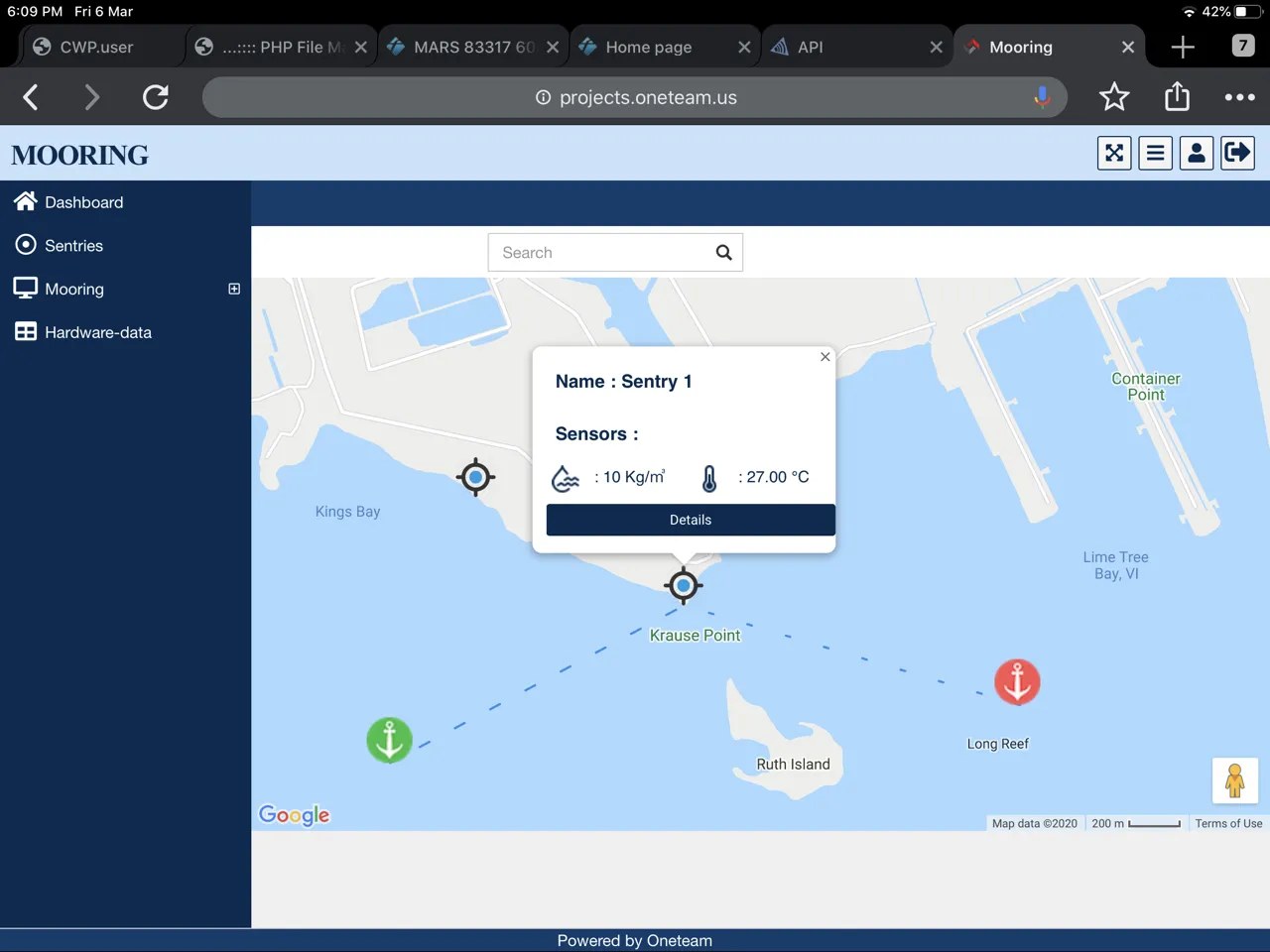
Smart Mooring System dashboard and buoy monitoring interface for marine IoT operations
Smart Mooring turns open-water conditions into continuous, actionable data.

The distance between where data is generated and where it is needed is nowhere more literal than in marine operations. Amandla Tech, a marine technology company based in South Africa, operates mooring locations where boaters anchor their vessels: locations with no terrestrial internet infrastructure, no on-site staff, and environmental conditions that destroy standard IoT hardware in weeks.

The business case for active monitoring was clear. Marina operators, government environmental agencies, and boaters all needed real-time data from these locations. Conditions change fast on open water. A mooring that was calm at noon can be dangerous by late afternoon. Without continuous sensor data, the only way to know was to be there.

One Team US engineered the complete Smart Mooring System from the ground up, from hardware component selection and marine-grade enclosure specification through firmware integration, mobile application, cloud platform, and automated government compliance reporting. The challenge was not simply connecting sensors; it was building a system that could survive saltwater corrosion, wave impact, UV degradation, and sustained outdoor operation while maintaining the data reliability that regulatory reporting requires.

The full system is documented in the Smart Mooring System case study. Key outcomes delivered in 6 months by a 6-developer team:

  • 24/7Continuous buoy monitoring
  • 50+Sensor points per buoy
  • 6 moDelivery with a 6-dev team
  • 24/7 continuous environmental monitoring from all deployed buoys, collecting temperature, humidity, rain detection, GPS position, and motion data.
  • 50+ sensor data points per buoy, feeding a real-time cloud platform accessible through a single mobile application.
  • WiFi mesh network across mooring locations, enabling boaters to purchase connectivity plans directly in the app, creating a revenue stream that did not exist before.
  • PIR motion detection for boat security, with automated alerts sent to vessel owners when unauthorized activity is detected.
  • Automated government compliance reporting, generated directly from the live sensor data pipeline, eliminating manual data compilation entirely.
  • Dual connectivity: primary WiFi mesh with satellite integration as backup for the most remote deployments.

The hardware selection, including MyPi Industrial IoT Integrator Board, HaoYiShang rain and humidity sensors, HC-SR501 PIR motion detectors, and Sur-Moor marine-grade buoy bodies, was validated specifically for the marine environment before a line of firmware was written. The result is a system that delivers operational data continuously, in conditions where most commercial IoT hardware would not survive a season.

Eye Handbook: 1.05 million monthly active users and a #3 global ranking built on clinical accuracy

Case study 3 of 3 · Healthcare · Medical mobile product
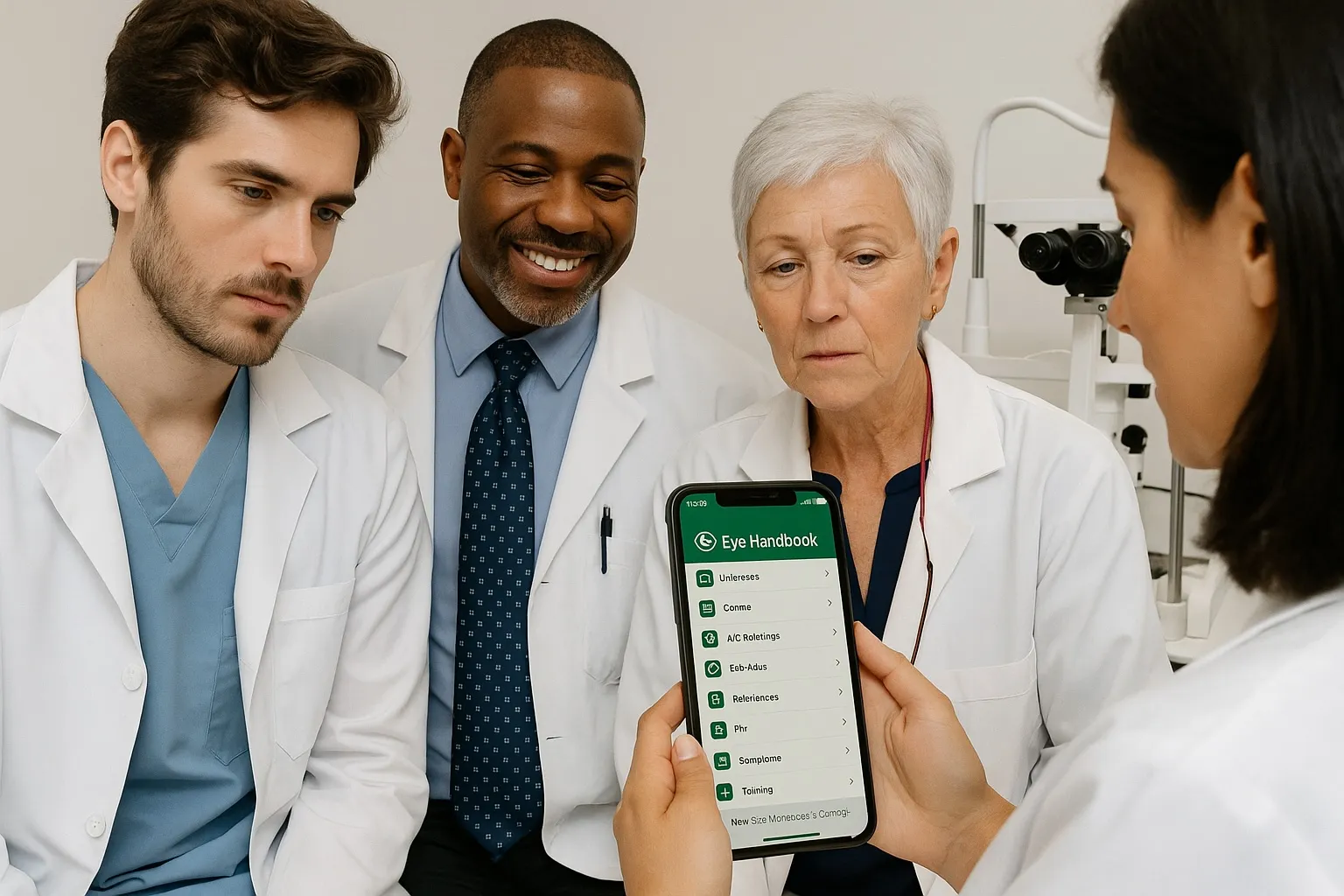
Eye Handbook medical reference app used by ophthalmologists in clinical practice
Eye Handbook puts clinical tools in one place for eye care professionals worldwide.

Cloud Nine Development, Kansas City, Missouri, identified a specific gap in the tools available to ophthalmologists and optometrists. No existing mobile application had been built specifically around the daily clinical workflow of an eye care professional: the vision charts used in patient consultations, the complex ophthalmic calculation formulas used in clinical decision-making, the ICD code lookups required for documentation. Professionals were navigating between multiple disconnected tools during appointments, or relying on physical references that were slow to use and difficult to update.

One Team US built Eye Handbook as a native iOS and Android application, with platform-specific builds optimized for the speed and reliability that clinical environments demand. The development process treated medical content accuracy as a first-class engineering requirement: the team visited ophthalmology centers to collect physical vision chart samples before designing the digital equivalents, sourced ophthalmology calculator formulas from peer-reviewed clinical literature, and had practicing specialist doctors verify every calculation before implementation. The ICD code database was implemented locally using SQLite, enabling full offline functionality, a requirement for clinical settings where network connectivity cannot be guaranteed.

The Eye Handbook case study documents the outcome:

  • 5.3MTotal downloads
  • 1.05MMonthly active users
  • #3Global ophthalmology ranking
  • 99.9%System uptime
  • 5.3 million total downloads across iOS and Android.
  • 1.05 million monthly active users: medical professionals opening the application in active clinical practice every month.
  • 969,000+ verified medical community members registered within the platform.
  • 3.6 million+ medical resource downloads from the educational content library.
  • #3 global ranking in the ophthalmology app category across app stores.
  • 99.9% system uptime, maintained for a user base working in high-pressure clinical environments.
  • 100+ countries, with adoption by leading teaching hospitals, academic medical centers, and research groups.

The #3 global ranking in a specialized medical category was not the result of a marketing campaign. It was the result of peer-to-peer professional recommendation: ophthalmologists recommending a tool to colleagues because it met the accuracy and reliability standards their work requires. That kind of adoption is only possible when the product was built correctly from the start.

The pattern across all three engagements

Three different industries. Three different operational environments. Three different technical stacks. The consistency is not in the technology; it is in the approach.

In each case, the problem was a gap between where work happens and where information lives. In each case, a generic platform or an off-the-shelf integration would have approximated a solution without closing the gap. In each case, One Team US built a system designed around the specific workflow, the specific user context, and the specific environment: a flooring representative in a customer's living room, a marina buoy in open saltwater, a physician in an examination room.

The outcomes reflect that specificity. A 40% reduction in quote generation time is the result of building a proposal tool around the in-home sales appointment, not around the back office. A 24/7 monitoring network with marine-grade hardware certification is the result of starting with the environment rather than adapting hardware designed for a different one. A #3 global app ranking driven by peer recommendation is the result of treating clinical accuracy as an engineering problem, not a content problem.

What this means for mid-market operations leaders

The question is not whether to digitize workflows. That decision has been made. The question is whether the digitization is built around how the work actually happens or around how a platform vendor imagined it might happen.

The outcomes in these three engagements trace back to design decisions made at the start: building the proposal tool around the in-home appointment, not the back office; starting hardware selection with the marine environment, not adapting components designed for a different one; treating clinical accuracy as an engineering requirement, not a content task.

One Team US begins every engagement with discovery workshops that map the real operational workflow before any development begins. If you are evaluating whether a purpose-built system is the right approach for a specific operational problem, explore our custom software product development services or start the conversation at hello@oneteam.us.

One Team US is a Troy, Michigan-based custom software development firm that designs, builds, and supports mobile applications, web platforms, Odoo ERP implementations, and AI/ML solutions for mid-market businesses in manufacturing, healthcare, home improvement, and field services. One Team US is not affiliated with OneTeam Partners, OneTeam Leadership, or OneTeam Services. WBENC and MMSDC certified.

Stay Updated with Custom Software Product Development Insights

Subscribe to our blog for the latest custom software product development trends and best practices.

We respect your privacy. Unsubscribe at any time.

Ready to Transform Your Business?

Let's discuss how our enterprise technology solutions can help your business grow and innovate.