Design reliable ETL workflows, feature pipelines, and training-serving data platforms that give machine learning systems governed, traceable inputs.
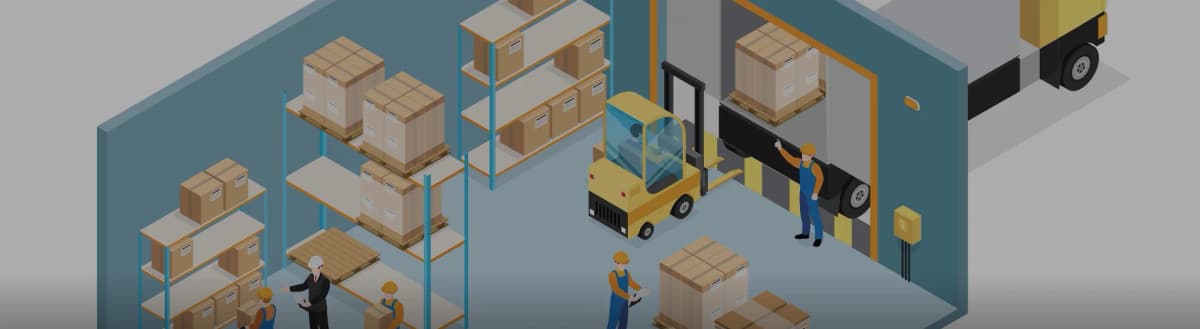
Models depend on data that is complete, timely, understandable, and consistent between training and production. One Team US designs the engineering path that collects operational data, validates it, applies governed transformations, publishes reusable features, and delivers the right representation to training and serving workloads.
This service is about the data and feature layer. MLOps governs the release, monitoring, and operating lifecycle around models. Both disciplines work together, but a deployment pipeline cannot correct an unreliable source feed or a feature that means one thing during training and another during inference.
| Current condition | Pipeline capability | Operational result |
|---|---|---|
| Data arrives from several operational systems | ETL or ELT orchestration with source contracts | A repeatable, traceable data foundation |
| Analysts rebuild the same transformations | Governed reusable data models | Consistent definitions across teams |
| Training and production calculate fields differently | Shared feature definitions and tests | Lower training-serving skew risk |
| Data quality problems appear after a model is released | Validation, lineage, and quarantine paths | Problems are detected before consumption |
| Batch files and events must coexist | Batch and streaming pipeline design | Data is available at the cadence the workflow needs |
| Sensitive records are copied into ad hoc stores | Access, retention, and minimization controls | Data use remains accountable |
We connect APIs, ERP and CRM exports, databases, files, event streams, devices, and application services through explicit contracts. Ingestion includes schema checks, duplicate handling, late-arriving records, source ownership, and retry behavior. The objective is not simply to move data; it is to preserve its meaning and provenance.
Transformations normalize identifiers, time, units, reference data, and business rules into a usable analytical or operational representation. Quality checks define what is valid, what can be repaired, what must be quarantined, and who is notified. Raw source records remain traceable so teams can investigate a downstream result.
Features are reusable calculations consumed by models: recent service activity, customer history, equipment state, inventory context, or other task-specific signals. A feature store can be useful when many models need governed, low-latency, consistent features. It is not required for every project; shared code and versioned transformations may be the more maintainable choice for a bounded workload.
We define how a model receives the same logically equivalent data during historical training, offline evaluation, batch scoring, and online inference. This includes point-in-time correctness, versioned transformations, input schemas, availability assumptions, and tests using representative records.
Pipelines need owned schedules or event triggers, idempotent steps where practical, run history, freshness checks, cost awareness, and a controlled response to partial failure. A failed load should not silently create a plausible but incomplete feature table.
Operational sources move through governed ingestion, curated transformation, feature publication, and consumption by training, evaluation, and serving workloads with lineage and observability throughout.
Operational systems, applications, devices, and external feeds publish governed records through APIs, files, replication, or events. The ingestion layer validates identity, schema, timestamps, and delivery status before accepting them.
Raw and curated data are separated according to the organization’s needs. Transformations create documented, testable datasets while retaining lineage to the source and the code that produced them.
Reusable feature definitions serve training, evaluation, batch scoring, and real-time applications. Access follows the use case, not the convenience of a broad shared credential.
Data-quality checks, freshness signals, lineage, access logs, and downstream feedback show whether the pipeline remains fit for the decisions it supports.
| Pattern | Appropriate when | Tradeoff |
|---|---|---|
| Batch ETL | Decisions can use scheduled data | Simpler operations, but data is not immediate |
| Event-driven pipelines | A workflow needs a response near the business event | Requires replay, ordering, and idempotency design |
| Centralized warehouse or lakehouse | Several teams need governed analytical data | Requires data-product ownership and access discipline |
| Feature store | Several models share online and offline features | Adds platform and operational responsibility |
| Application-owned features | One bounded product needs a small feature set | Can create duplication if not governed as scope expands |
We identify the business decision, source systems, ownership, refresh needs, required context, downstream consumers, and the impact of late or incorrect data.
We examine data contracts, identifiers, historical completeness, permissions, change behavior, API limits, and available test environments. This work often exposes the critical risk before a model is selected.
We document inputs, transformations, owners, quality rules, retention, and consumer interfaces. The contract includes what happens when data is missing or outside expected bounds.
We implement the highest-value source-to-consumer path, including tests, observability, retries, and a recovery path. Early delivery proves the real constraints rather than relying on a sample export.
Additional sources and features use repeatable templates, shared controls, documentation, and clear ownership rather than becoming a collection of one-off jobs.
Production, maintenance, quality, asset, and supply data can be reconciled into governed features for forecasting, anomaly detection, maintenance support, and operational reporting.
Work-order, technician, product, scheduling, and customer data can support dispatch preparation, service analytics, and controlled AI-assisted workflows without replacing the system of record.
Administrative and operational data needs strict authorization, lineage, and review. Pipelines can support non-clinical intake, capacity, documentation, and workflow analysis within approved boundaries.
Catalog, order, inventory, fulfillment, shipment, and customer-service data can be prepared for demand, exception, and service workflows while preserving timing and source context.
| Phase | Typical range | Primary output |
|---|---|---|
| Discovery and source assessment | 1–3 weeks | Data map, risks, and priority path |
| Contracts and target design | 2–4 weeks | Data, feature, access, and operating architecture |
| Representative pipeline | 3–7 weeks | Tested ingestion, transformation, and consumer path |
| Integration and production hardening | 2–6 weeks | Monitoring, recovery, security, and runbooks |
| Expansion | Ongoing | Additional sources, features, and consumers |
These are planning ranges, not commitments. Source access, historical quality, identity design, and legacy interfaces often determine the critical path.
| Factor | Why it matters |
|---|---|
| Source count and condition | Each API, file, database, or event source has its own contracts and failure modes |
| Data quality and history | Incomplete or inconsistent records require discovery and remediation |
| Batch, streaming, and latency needs | Real-time paths require different reliability and operating controls |
| Feature reuse | Shared features may justify a platform; bounded use cases may not |
| Security and residency | Sensitive data changes access, storage, logging, and deployment decisions |
| Consumer integrations | Training, serving, analytics, and applications need explicit contracts |
| Ownership and support | Pipelines need named operators, alerts, and change procedures |
Storage does not create a usable data product. A pipeline needs defined consumers, semantics, owners, and acceptance checks.
Historical records can contain leakage, changed definitions, missing context, and labels created after the decision. Point-in-time design and validation are necessary.
When training notebooks, batch jobs, and online services each calculate a feature differently, model behavior becomes difficult to trust or diagnose.
A successful job can still publish incomplete, stale, or semantically incorrect records. Freshness and quality are operational signals.
Data and feature engineering supply the model’s inputs. MLOps controls model release, evaluation, serving, monitoring, and lifecycle. The architecture should make the handoff explicit.
They design and implement the governed path from operational data to model training, evaluation, batch scoring, and real-time serving. The work includes ingestion, transformation, quality checks, feature definitions, lineage, security, observability, and consumer contracts.
Data engineering focuses on collecting, transforming, and delivering reliable data and features. MLOps focuses on versioning, evaluating, releasing, monitoring, and operating model systems. A production AI program normally needs both, but they solve different failure modes.
Not always. A feature store is most useful when several models or applications need shared, governed features across offline and online environments. For a single bounded workflow, versioned transformation code and clear contracts may be simpler and sufficient.
It occurs when production inputs differ from the representations used during training. Shared definitions, schema validation, representative tests, and lineage reduce the risk.
Yes. The design begins with the authoritative system, its access model, available interfaces, change behavior, and the minimum fields required for the intended workflow.
Yes, when the decision requires current context. Event-driven and online feature paths require explicit latency, replay, idempotency, availability, and fallback design. Batch is often more appropriate when immediate action is not required.
We make the condition visible through profiling, contracts, validation, and quarantine paths. Some issues can be normalized; others require a source owner or a workflow decision. Silent correction is not a reliable governance model.
Controls include least-privilege access, environment separation, encryption, data minimization, retention rules, audit logs, approved hosting boundaries, and tests for cross-user or cross-tenant exposure.
Yes. The architecture can use existing cloud services, data platforms, CI/CD, and observability where they satisfy the requirements. Tool selection follows the operating model and workload rather than a fixed stack.
Measures should connect reliability to the consuming workflow: freshness, completeness, quality failures, recovery time, lineage coverage, engineering lead time, training-serving consistency, and the downstream decision outcome.
The pipeline should have defined behavior: safe retry, queueing, alerting, partial-data prevention, reconciliation, and recovery ownership. It should not publish a dataset that appears complete when it is not.
Choose one decision with a known data dependency and a measurable current problem. One Team US can assess the sources, define the data contract, prove a representative path, and produce a phased production plan.
One Team US can assess your source systems, establish governed data and feature contracts, and implement the pipeline patterns required for training, evaluation, and serving.
