What are computer vision development services?+
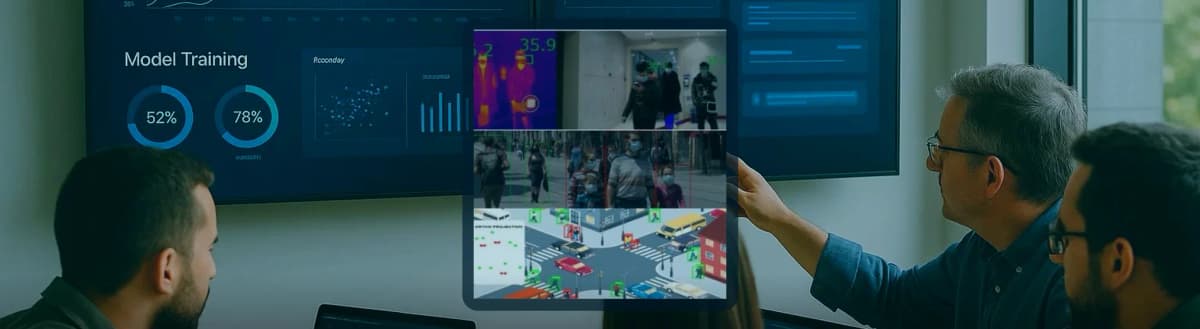
Computer vision development services design and build software that interprets images or video for a defined operational task. The work can include capture design, data preparation, labeling, model evaluation, review experience, API and application integration, security, monitoring, and lifecycle controls. The output may be a defect finding, count, object location, quality check, safety observation, or condition classification.
Is computer vision the same as AI video analytics?+
AI video analytics is one delivery pattern within computer vision, usually focused on continuous or recorded video. Computer vision also covers single-image inspection, mobile capture, document or label reading, edge inference, visual quality control, and other image-based workflows. This page is the commercial pillar for production vision systems; video analytics is an applicable related service when video is the correct input.
Can computer vision replace human inspection?+
Sometimes it can automate a narrow, well-validated check, but replacement is not the default goal. Many systems prioritize inspection, provide evidence, and route exceptions to qualified reviewers. The appropriate authority depends on the error cost, capture reliability, policy, and ability to recover from a mistaken result.
What image or video data is needed for a vision project?+
Representative images or video, a clear definition of expected output, and evidence from the conditions where the system will operate are essential. Labels may identify defects, objects, regions, states, counts, or review outcomes. Data should include normal variation, edge cases, different sites, devices, lighting, and conditions relevant to the workflow.
How accurate can a vision system be?+
There is no responsible universal accuracy number. Results depend on the task, capture quality, class rarity, scene variation, label quality, and the decision threshold. Evaluation should report the error types that matter, performance by meaningful segment, and the resulting review workload rather than relying on a single aggregate score.
Can it run at the edge?+
Yes, when latency, connectivity, privacy, or bandwidth make local inference appropriate. Edge delivery adds device management, model packaging, updates, telemetry, recovery, and hardware constraints. The architecture should compare those obligations with a cloud or hybrid option.
How does computer vision handle poor lighting or occlusion?+
First, capture design addresses lighting, lens, placement, trigger timing, and scene control. The model is then evaluated on the remaining variation. If a usable image cannot be captured, the workflow needs a deterministic fallback such as re-capture, manual inspection, or no decision.
Can it integrate with our ERP, MES, or EHS system?+
Yes. Validated results can create review tasks, attach evidence, update controlled records, trigger alerts, or enrich analytics through APIs, events, queues, or application services. The destination system remains authoritative and its normal authorization, validation, retries, and audit requirements still apply.
What privacy controls are needed?+
Controls depend on the scene and use. They commonly include purpose limitation, notices, access control, retention limits, encryption, environment separation, masking, export restrictions, and audit logs. Uses involving people, sensitive locations, or biometric identification need heightened policy and legal review.
How long does a computer vision implementation take?+
A bounded, well-captured inspection prototype can take several weeks. Production work adds time for site assessment, data and label readiness, review design, integrations, load testing, security, monitoring, and controlled rollout. The timeline follows the actual task and operating conditions.
How is a vision system monitored after launch?+
Monitoring covers cameras and input quality, service uptime, latency, model version, prediction and confidence patterns, review decisions, confirmed outcomes, and drift by relevant site or condition. Teams need ownership and rollback procedures for both software and model changes.